A cracked grout joint, a chipped tile, and a loose floor tile may look like minor surface problems. But the repair depends on what caused the damage—and whether the supporting tile installation is still sound.
Some problems can be corrected by replacing deteriorated grout or a single damaged tile. Others originate beneath the surface, where movement, inadequate bonding, moisture, or substrate deterioration may cause the same damage to return.
Before repairing tile or grout, identify the visible symptom, check the surrounding installation, and determine whether the failure is cosmetic, localized, or part of a larger assembly problem.
This guide helps homeowners assess common tile and grout damage, understand possible causes, compare repair options, and recognize when a professional inspection is necessary.
Tile and Grout Repair: A Quick Diagnosis Table
Use the following table to identify the appropriate next step. The possible causes are not confirmed diagnoses.
| What you see | Possible cause | What to do next |
|---|---|---|
| A small chip in one stable tile | Localized impact damage | Check whether cosmetic repair or replacement is appropriate |
| One cracked tile with stable neighboring tiles | Impact or localized stress | Inspect the surrounding grout and supporting assembly |
| Loose or crumbling grout | Poor grout installation, deterioration, or movement | Check tile stability before regrouting |
| Grout cracking repeatedly in the same location | Substrate movement, loose tile, or an incorrectly treated joint | Investigate before making another surface repair |
| A cracked joint where two walls meet | Differential movement at a change of plane | Determine whether a movement joint and flexible sealant are required |
| Hollow-sounding tile | Installation characteristics, a void, or separation | Compare surrounding areas; sound alone is not proof of failure |
| Tile that clicks or rocks underfoot | Loss of stability or bond, possibly involving substrate movement | Avoid loading the area and investigate |
| Several tiles lifting into a ridge | Compressive stress, potentially involving inadequate movement accommodation | Keep the area clear and seek professional assessment |
| Water stains near tiled surfaces | Plumbing, drainage, or waterproofing problems | Identify and correct the water source before repairing the finish |
| Recurring white deposits | Moisture transporting soluble salts | Investigate moisture and identify the deposit before cleaning |
Stop and investigate before repair if tiles are lifting, movement is spreading, water is entering adjoining construction, or damage returns after previous repairs.
An attractive surface repair is not evidence that the underlying problem has been resolved.
Understand the Tile Assembly Before Choosing a Repair
Tile is part of a layered installation. The visible finish is only one component.
Depending on the application and installation method, a tiled surface may include:
Tile: Ceramic, porcelain, natural stone, or another approved finish.
Grout: Material filling ordinary joints between tiles.
Setting mortar or adhesive: The bonding material used to attach the tile to an approved surface.
Underlayment: A layer that provides a suitable installation surface or performs another specified function.
Substrate: The concrete, mortar bed, approved panel, or other supporting construction.
Waterproofing or crack-isolation membrane: A product installed for a specific function where required.
Movement joints: Designed joints that accommodate certain movements in the tile installation.
Not every assembly contains all these components. Their arrangement varies with the selected system.
For a broader explanation of how these layers work together, see our tile installation guide, which covers installation planning, materials, and common mistakes.
Why the Different Layers Matter
Grout does not provide the primary bond holding tile in place.
A new grout joint cannot secure a loose tile. Likewise, a new tile cannot correct an unstable substrate simply because fresh setting mortar has been applied.
A waterproofing membrane serves a different purpose from ordinary grout. A crack-isolation membrane may accommodate specified in-plane substrate movement, but it is not a universal solution for structural displacement or movement-joint deficiencies.
The repair must address the component that failed while preserving the performance of the remaining assembly.
How to Inspect Tile Damage Before Repairing It
Start with observations that do not require removing material.
1. Identify Where the Damage Occurs
First establish whether the affected surface is:
A dry interior floor
A bathroom floor
A shower wall or shower floor
A kitchen wall or countertop
An exterior patio or walkway
An elevated balcony or roof deck
Location changes the repair decision.
For example, replacing a damaged tile on a dry kitchen floor may be relatively straightforward when the substrate is sound.
Removing tile from a waterproofed shower floor can damage concealed components and may require an assembly-specific repair.
2. Examine the Damage Pattern
Look beyond the most noticeable crack.
Ask:
Is the damage confined to one tile?
Does the crack extend through several tiles?
Is the crack only in the grout?
Does the crack follow a consistent straight or diagonal line?
Are adjacent tiles becoming loose?
Does the same damage return after repair?
A small chip may be consistent with impact damage.
A continuous crack crossing multiple tiles may raise concern about movement or cracking in an underlying layer.
Neither appearance alone establishes the cause.
Photograph the damage with a ruler or scale reference. Keep records of the location, date, and any changes over time.
3. Check Whether Tiles Are Stable
Look for visible movement, raised edges, missing grout around tiles, or separation from adjoining surfaces.
A tile that moves, clicks, or rocks under normal use deserves further investigation.
Do not force a suspicious tile downward, pry open its edge, or repeatedly load an unstable area merely to test it.
4. Compare Hollow Sounds Carefully
Light tapping may reveal areas that sound different from neighboring tiles.
However, a hollow sound does not necessarily indicate that the tile has lost its bond.
Certain mortar-bed and uncoupled installation systems may produce hollow sounds because of the way the assembly is constructed.
Sound becomes more concerning when accompanied by tile movement, deteriorating grout, cracks, or an expanding affected area.
A hollow sound is an inspection clue, not a stand-alone reason to replace the tile.
5. Look for Moisture Evidence
Check for:
Dampness that persists after normal drying
Water staining below or beside the tiled area
Softened or swollen adjacent materials
Unusual odors associated with persistent moisture
Recurring mineral deposits
Visible leakage around plumbing or drains
These symptoms can be associated with different water sources, including plumbing leaks, condensation, drainage defects, or failure within a building assembly.
Determine the source before deciding which tile components need repair.
6. Review Previous Repairs and Installation History
Try to establish when the surface was installed, when the damage appeared, and whether previous repairs were successful.
Product information, installation photographs, contractor documents, and maintenance records may help narrow the investigation.
Repeated failure in the same location is especially important because it can indicate that an earlier repair did not address the original cause.
Why Does Tile Grout Crack or Crumble?
Cracked grout can result from several different mechanisms.
Movement in the Supporting Floor
Rigid grout is vulnerable when supporting layers move beyond what the installation can accommodate.
Potential sources include floor deflection, movement between subfloor panels, or changes in an underlying concrete slab.
Possible signs are recurring grout cracks, damage affecting several joints, and grout breaking away from tiles that are no longer stable.
Replacing grout will not correct inadequate support.
Improper Grout Preparation or Installation
A grout joint can deteriorate even when the supporting tile remains stable.
Possible contributors include:
Excessive mixing water or additives
Grout not adequately packed into the joint
Adding water after cementitious grout begins setting
Excessive water during cleanup
Unsuitable grout for the application or joint width
Improper curing conditions
These conditions can contribute to weak, crumbly, or incomplete grout.
For example, grout placed mainly across the surface of a joint may have inadequate depth and strength.
In this situation, localized grout replacement may be appropriate once the installation conditions are confirmed.
Loose Tiles Causing Grout Failure
When a tile loses stability, movement can fracture the surrounding grout.
New grout may crack again because the underlying tile is still moving.
The tile bond and substrate must be addressed before replacing the joint material.
Missing or Incorrect Movement Joints
Movement joints allow an installation to accommodate certain dimensional changes.
They may be required at perimeters, changes of plane, relevant construction joints, and locations determined by the installation design.
Rigid grout placed in a joint intended for movement can crack when adjoining surfaces move differently.
The TCNA Handbook addresses movement-joint design through EJ171. Actual requirements depend on the assembly, dimensions, environmental exposure, and applicable installation details.
A properly designed joint may require compatible flexible sealant or a manufactured movement-joint profile.
Applying sealant over a filled or deteriorated joint is not equivalent to constructing a functional movement joint.
Why Do Ceramic and Porcelain Tiles Crack?
Tile cracks do not all indicate a defective tile.
Impact Damage
A dropped object can chip or fracture one tile.
When the damage is isolated, nearby tiles remain firmly bonded, and the substrate is sound, a localized repair or replacement may be sufficient.
However, a visible impact mark does not eliminate the need to check for other contributing conditions.
Reflective Cracking From Concrete
When tile is bonded over concrete, cracks or movement in the concrete can transfer stress into the tile.
This is known as reflective cracking.
A crack that follows a continuous line across several tiles can raise suspicion of an underlying substrate problem.
A replacement tile may crack again if the substrate continues to move.
Some crack-isolation systems are designed to accommodate specified in-plane crack movement, but their capabilities and limitations vary by product.
They do not automatically accommodate vertical displacement, active structural movement, or every type of concrete joint.
Existing control joints and other movement joints must be evaluated according to the applicable installation method rather than simply covered with tile.
Excessive Floor Deflection
Wood-framed floors can experience movement between joists, subfloor panels, and supporting layers.
Potential concerns include:
Inadequate floor stiffness
Damaged or undersized framing
Poorly attached subfloor panels
Unsuitable underlayment
Concentrated loading
Movement between installation layers
L/360 is a traditionally referenced floor-deflection criterion for ceramic tile installations.
However, meeting that value alone does not establish that an entire floor assembly is suitable for tile. Movement between framing members, local support conditions, and the selected installation method also matter.
A qualified professional should evaluate suspected structural or widespread floor movement.
Inadequate Mortar Support
Insufficient mortar contact can leave areas of tile inadequately supported.
Under loading, this may contribute to cracking or bond failure.
Possible causes include unsuitable mortar, incorrect application, contamination, or disturbance during curing.
The condition should be verified through appropriate inspection rather than inferred solely from the crack pattern.
For an explanation of different bonding materials and their appropriate uses, see Tile Mortar and Adhesives: Types and How to Choose.
Thermal Expansion and Restraint
Temperature changes and other dimensional movements can place stress on tiled surfaces.
When movement is not adequately accommodated, tiles can crack, lose their bond, or lift.
Direct sunlight, moisture exposure, and large temperature variations are relevant considerations when assessing movement-joint design.
Hollow, Loose, and Tented Tiles Are Different Problems
The correct repair depends on distinguishing these conditions.
Hollow-Sounding Tiles
A hollow-sounding tile produces an acoustic response that differs from surrounding tiles.
This may be associated with a void or separation, but it can also result from the construction of a particular mortar-bed or uncoupled assembly.
A hollow sound without visible movement or deterioration does not automatically justify removal.
The installation method and other symptoms should be considered before deciding whether intervention is necessary.
Loose Tiles
A loose tile has lost sufficient stability that movement or separation is apparent.
Potential causes include:
Inadequate bond
Substrate movement
Moisture-related deterioration
Contaminated bonding surfaces
Inadequate mortar coverage
Improper movement accommodation
One loose tile may represent a localized problem or an early sign of a larger defect.
Before resetting it, determine whether the supporting materials are suitable for reuse.
Tile Tenting or Buckling
Tenting occurs when tiles lift or heave, sometimes forming a raised ridge.
Compressive stress within the tile installation is an important possible cause. Missing or inadequate movement joints can contribute.
Tenting can develop years after installation, even where the original mortar bond was initially adequate.
Possible signs include several adjoining tiles lifting together, grout compression or cracking, and sudden displacement.
Keep people off an affected area and arrange a professional assessment.
Do not try to force lifted tiles flat.
Will Injecting Adhesive Fix a Hollow or Loose Tile?
Epoxy injection or other rebonding methods may be considered for some limited conditions.
However, injection is not appropriate for every installation.
It cannot reliably correct an unstable substrate, widespread bond failure, unresolved moisture damage, or inadequate movement accommodation.
Before selecting an injection repair, a qualified installer needs to establish the condition of the assembly and whether the proposed method addresses the cause.
How to Choose the Right Tile or Grout Repair
The appropriate repair depends on the confirmed condition of the tile and the supporting assembly.
| Repair option | When it may be suitable | Important limitation |
|---|---|---|
| Cosmetic chip repair | Minor damage to a stable tile in a suitable location | Does not necessarily restore original strength or surface performance |
| Localized regrouting | Failed grout between firmly bonded tiles | Does not correct tile or substrate movement |
| Flexible movement-joint repair | A defective joint designed to accommodate movement | Requires correct joint geometry and compatible materials |
| Single-tile replacement | Isolated damage with a sound supporting assembly | Removal can damage concealed layers |
| Localized bond or substrate repair | Limited confirmed deterioration that can be restored | Requires compatibility with the remaining installation |
| Larger sectional replacement | Multiple affected tiles or localized assembly failure | Cause must be addressed before rebuilding |
| Full installation replacement | Widespread or irreparable supporting-system failure | Should follow evaluation rather than being assumed from visible cracks |
This table is intended to guide the scope of an investigation, not authorize a repair without examining site conditions.
When a Localized Repair Makes Sense
A limited repair is more reasonable when damage is confined, the cause is understood, surrounding tiles remain stable, and the necessary performance of the assembly can be restored.
For example, a cracked tile caused by a clearly localized impact may be replaceable without rebuilding an entire floor.
When a Larger Repair Is Necessary
A larger repair may be warranted when multiple tiles have lost their bond, substrate deterioration extends beyond the visible damage, or a waterproofing system cannot be reliably restored through a small opening.
Repeated damage after previous repairs also justifies reconsidering the repair scope.
When Full Replacement Should Be Considered
Full replacement may be necessary when the installation has widespread bond loss, an unsuitable supporting system, extensive water damage, or other conditions that prevent a durable localized repair.
The number of cracked tiles alone does not determine the correct scope.
How to Repair Cracked or Crumbling Grout
Localized regrouting can be appropriate when:
The damaged material is ordinary grout rather than a movement-joint sealant.
Surrounding tiles remain firmly bonded.
The substrate is stable.
No unresolved water intrusion is present.
The replacement product is compatible with the existing installation.
The reason for deterioration has been addressed or reasonably ruled out.
Basic Steps for Localized Regrouting
For a suitable, accessible, low-risk area:
Confirm the cause and repair scope. Inspect the surrounding tiles and check whether the joint is intended to receive grout.
Remove the deteriorated material. Carefully create the joint depth required by the applicable grout system without damaging tile edges or concealed components.
Clean and prepare the joint. Remove loose debris and contamination according to the manufacturer's instructions.
Select the replacement grout. Confirm compatibility with joint width, tile material, exposure conditions, and existing construction.
Install the grout correctly. Follow the specified mixing, application, cleanup, and working-time requirements.
Allow proper curing. Respect the manufacturer's instructions before exposing the repair to cleaning, traffic, or water.
TCNA's guidance for conventional grout replacement states that at least two-thirds of the existing grout depth should be removed rather than simply covering the old material.
Proprietary grout products may have different requirements. The applicable manufacturer instructions must be checked.
For grout selection criteria and application basics, see Tile Grout: Types, Selection, and Application Basics.
Can New Grout Be Applied Over Old Grout?
A thin layer of conventional grout over an existing joint is generally not a durable replacement method.
The new grout needs the preparation and available joint depth required by the product and installation method.
If the existing grout is sound but discolored, cleaning or a compatible grout colorant may be more appropriate than removal.
Repeated cracking requires investigation rather than additional layers of grout.
When Should Flexible Sealant Be Used Instead?
A joint intended to accommodate movement should not automatically be filled with ordinary rigid grout.
Depending on the installation, a properly designed flexible sealant joint or movement-joint profile may be required.
Correct joint preparation, dimensions, sealant compatibility, and curing are essential.
How to Replace a Cracked or Broken Tile
Replacing a tile is appropriate only when the remaining supporting assembly is suitable.
The general process involves:
Identifying the likely cause of damage.
Checking the stability of adjacent tiles.
Identifying concealed waterproofing, heating, or specialized underlayment.
Removing the damaged tile without unnecessarily harming the surrounding installation.
Inspecting the exposed substrate and bonding materials.
Restoring any damaged supporting components using an approved method.
Installing a compatible replacement tile and finishing the joints correctly.
Allowing the specified curing period before returning the surface to use.
Tile removal may involve sharp fragments, hazardous dust, and concealed building components. The method must be suitable for the actual assembly.
This general sequence is not a substitute for the manufacturer's installation instructions or a specialist repair specification.
When One-Tile Replacement Is Not Enough
Replacing a single tile may be ineffective when:
Several neighboring tiles are debonded.
An underlying concrete crack is still moving.
The substrate is soft, damaged, or unstable.
A concealed waterproofing layer has failed.
The installation has inadequate movement accommodation.
In these situations, investigation and repair of the affected assembly should precede replacement of the finish.
What If the Original Tile Is Discontinued?
A replacement should be checked for actual size, thickness, edge profile, finish, color, pattern, and suitability for the application.
Tiles with the same nominal dimensions do not always have matching actual dimensions.
When an exact match is unavailable, options include a compatible substitute, a planned contrasting detail, or replacement of a larger visually continuous area.
The amount of removal should be determined by functional and aesthetic needs, not appearance alone.
For additional information about the properties and applications of different materials, see Types of Tile: Materials, Uses, and How to Choose.
Can You Repair a Chipped Tile Without Replacing It?
A small chip in a stable tile may be suitable for cosmetic repair with an approved product.
However, appearance restoration is not necessarily equivalent to restoring the tile's original mechanical performance.
A filler may not reproduce the original glaze, wear resistance, slip resistance, or edge strength.
Cosmetic repairs should be considered cautiously on walking surfaces, stair edges, and areas exposed to significant loading or moisture.
Replacement may be more appropriate for sharp fractures, larger missing sections, through-cracks, or unstable tiles.
Tile Repair in Showers and Other Wet Areas
Shower tile repairs deserve special attention because a waterproofing system may be concealed directly beneath the tile.
Does Cracked Shower Grout Mean Waterproofing Has Failed?
Not necessarily.
Ordinary tile and grout are not a substitute for a properly designed shower waterproofing system.
A cracked joint can allow more moisture to enter the tile-setting assembly, but it does not establish that the waterproofing system has failed.
Likewise, intact grout does not prove that the shower is waterproof.
When Should a Shower Repair Be Investigated Further?
Further investigation is appropriate when:
Water stains appear outside or below the shower.
Adjacent construction remains persistently damp.
Tiles become loose near the drain or other wet locations.
Deterioration continues after previous repairs.
Leakage is suspected at a curb, niche, wall penetration, or plumbing connection.
An active leak should be addressed before normal shower use resumes.
Why Regrouting Cannot Repair Every Shower Leak
Regrouting addresses damaged grout.
It does not automatically restore a defective drain connection, damaged waterproofing membrane, or failed transition detail.
Likewise, applying grout sealer does not turn an unsuitable shower assembly into a waterproof one.
Removing tile can damage a waterproofing layer. Any required repair must follow the requirements of the specific system or an appropriately designed replacement assembly.
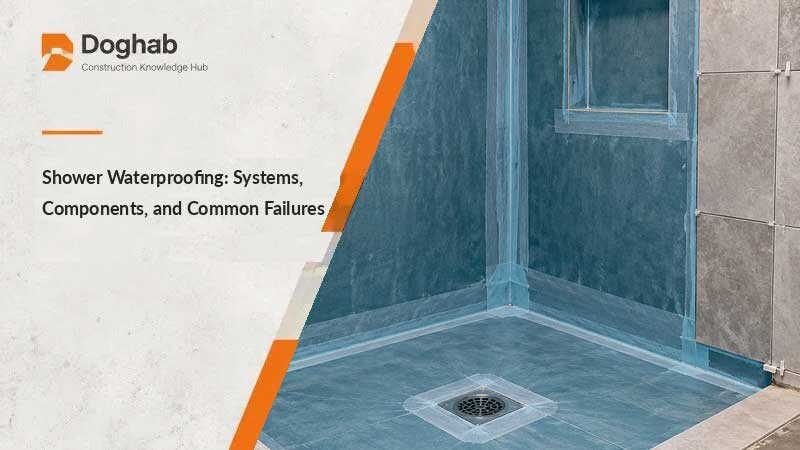
For a detailed explanation of membranes, drains, transitions, and common failure points, see Shower Waterproofing: Systems, Components, and Common Failures.
Outdoor Tile, Patios, and Balcony Repairs
Exterior tiled surfaces face conditions that differ from those in most interior installations.
Relevant factors include:
Rainwater and drainage
Temperature variation
Freeze-thaw exposure
Movement in supporting construction
Direct sunlight
Moisture retention within the assembly
A replacement tile should be suitable for the location, but selecting an exterior-rated tile alone is not enough to ensure successful performance.
Setting materials, substrate preparation, drainage, and movement accommodation also matter.
Why Outdoor Tile Can Keep Cracking
Outdoor cracks may be associated with substrate movement, thermal stress, inadequate bonding, moisture, or freeze-thaw deterioration.
A repeated failure should lead to assessment of the installation rather than repeated replacement of the visible tile.
Balcony and Roof Deck Damage
Elevated tiled surfaces can contain waterproofing and drainage components that protect spaces below.
Repairing a damaged tile without checking those systems may leave water intrusion unresolved.
Where leakage or concealed system damage is suspected, professional assessment is appropriate before removal.
Surface Problems That Do Not Always Require Tile Replacement
Some discoloration and residue problems affect appearance rather than the stability of the installation.
Efflorescence
White mineral deposits can appear when moisture transports soluble salts to the surface.
Recurring deposits may justify a moisture investigation, especially when they accompany dampness or other signs of deterioration.
Cleaning removes the visible deposit but does not necessarily eliminate the moisture source.
Grout Haze
Grout haze is residue left on tile after installation.
Its removal depends on the grout chemistry and the tile's tolerance for cleaning products.
Cementitious residue and epoxy residue may require different methods. Avoid aggressive cleaning without checking compatibility.
Grout Discoloration
Dark or uneven grout can result from soil, cleaning residue, moisture, or material-related changes.
Discoloration alone does not establish that the grout has failed.
Determine whether the problem is contamination, staining, or actual material deterioration before choosing a remedy.
Fine Surface Cracks and Crazing
Fine cracks in a glazed surface are not necessarily identical to a fracture through the tile body.
The tile's construction, product specifications, and actual condition should be considered when deciding whether replacement is necessary.
For routine cleaning and stain removal, use a dedicated tile and grout maintenance guide rather than treating every discoloration as repair damage.
What About Uneven Tile and Lippage?
Lippage is the difference in elevation between the edges of adjacent tiles.
It may relate to installation conditions, substrate flatness, or inherent tile warpage.
A stable height difference present since installation is different from tiles that have recently lifted.
Check whether the condition is changing, whether nearby grout is cracking, and whether the uneven edge creates a safety hazard.
Do not assume that grinding down a tile edge is an appropriate remedy. It may damage the surface, create hazardous dust, or fail to address the original cause.
New or increasing elevation changes require further investigation.
DIY Tile Repair vs. Professional Repair
Some localized cosmetic or grout repairs can be suitable for homeowners who understand the relevant products and safety requirements.
Other problems call for qualified assistance.
| Potentially suitable for limited DIY work | Professional assessment generally appropriate |
|---|---|
| Small cosmetic chip in a stable, dry-area tile | Widespread or recurring grout cracking |
| Localized grout deterioration between stable tiles | Loose or tented tile installations |
| Accessible single-tile replacement on a verified sound, uncomplicated dry assembly | Structural floor movement or extensive substrate deterioration |
| Routine maintenance using compatible products | Shower waterproofing or drain problems |
| Balcony or roof-deck leakage | |
| Extensive hidden moisture damage |
The suitability of DIY work still depends on the construction, tools, experience, and manufacturer's requirements.
Important Tile Repair Safety Considerations
Tile removal can generate sharp fragments, flying debris, noise, and hazardous dust.
Cutting or grinding silica-containing tile and mortar can create respirable crystalline silica exposure.
Contractors must comply with applicable occupational safety requirements, including the relevant OSHA construction standard and any applicable state-plan requirements.
A household vacuum, open window, or ordinary dust mask should not be assumed to provide adequate protection during dust-generating work.
Identify concealed pipes, electrical services, floor-heating systems, and waterproofing layers before removal.
When these components cannot be identified or protected, stop and obtain qualified assistance.
How to Compare Tile and Grout Repair Quotes
Repair estimates are only comparable when the proposed work covers a similar scope.
One contractor may propose replacing damaged grout. Another may include tile removal, substrate repair, or restoration of a waterproofing system.
Ask for a written explanation of the suspected cause, planned inspection, work scope, and conditions that could require additional work.
Contractor Quote Checklist
The affected area and visible symptoms are documented.
The proposed diagnosis is explained.
Any exploratory opening or testing is specified.
Grout and tile removal quantities or areas are identified.
Substrate repairs are included or explicitly excluded.
Waterproofing and movement joints are addressed where relevant.
Replacement products and system compatibility are documented.
Protection of surrounding surfaces and dust-control measures are included.
Cleanup and disposal responsibilities are defined.
Curing and return-to-service requirements are specified.
Potential additional costs for concealed damage are explained.
Warranty terms and exclusions are provided.
What Affects Tile Repair Cost?
The cost depends on the affected area, accessibility, labor, replacement materials, tile availability, demolition requirements, and condition of the supporting assembly.
Waterproofing restoration or substrate reconstruction can substantially change the scope.
A small visible defect does not always mean a small repair, and widespread cosmetic staining does not necessarily require replacement.
Request estimates based on documented work rather than comparing prices without examining what is included.
Common Tile and Grout Repair Mistakes
Regrouting Around Loose Tiles
New grout does not restore the primary bond holding a tile to its substrate.
Correct the cause of movement before repairing the surrounding joints.
Replacing a Cracked Tile Without Checking the Substrate
A replacement can fail when the original stress remains.
Inspect for movement, substrate cracking, and inadequate support.
Filling Movement Joints With Ordinary Grout
Rigid grout may crack when adjoining surfaces move.
Preserve the intended function of each movement joint.
Using Sealers as a Waterproofing Repair
A grout sealer is not a substitute for a complete waterproofing system.
Investigate leaks instead of covering them with surface treatments.
Assuming Hollow Sound Means Immediate Replacement
Sound alone does not establish the cause or severity of a problem.
Consider installation type, visible movement, grout condition, and other evidence.
Ignoring Product Instructions
Setting materials, grouts, sealants, and membranes have different compatibility, preparation, application, and curing requirements.
There is no universal repair product or waiting period suitable for every installation.
How to Prevent Recurring Tile and Grout Damage
Routine inspection helps identify developing problems before they affect a larger area.
For an existing installation:
Inspect grout joints for new cracks or missing material.
Record tiles that begin moving or lifting.
Investigate persistent moisture promptly.
Keep appropriate drainage paths functional.
Maintain sealants and movement joints according to the system requirements.
Clean tile and grout with compatible products.
Avoid unnecessary mechanical damage during repairs.
Retain repair records when a problem has occurred more than once.
Long-term performance also depends on the original design and installation, including suitable substrate preparation, mortar selection, movement accommodation, and waterproofing where required.
Maintenance cannot compensate for fundamental deficiencies in those systems.
Frequently Asked Questions About Tile and Grout Repair
Can I repair cracked grout without removing the tiles?
Yes, when the tiles are firmly bonded, the supporting assembly is stable, and the cause of grout deterioration has been addressed. Localized regrouting may then be appropriate.
Why does grout keep cracking after I repair it?
Recurring cracks can indicate movement, loose tiles, inadequate joint preparation, or incorrectly treated movement joints. Another layer of grout is unlikely to resolve an underlying assembly problem.
Does a hollow-sounding tile need to be replaced?
Not automatically. The sound may result from installation characteristics or separation within the assembly. Actual movement, surrounding damage, and installation details provide more useful evidence.
Can one cracked floor tile be replaced?
Often, if the damage is isolated and the remaining installation is sound. The supporting layers should be inspected before the replacement is installed.
Can cracked shower grout cause water damage?
Cracked grout can change how moisture reaches the underlying assembly, but it does not by itself prove that the waterproofing system has failed. Persistent leakage requires a broader investigation.
What should I do if floor tiles suddenly lift?
Keep people off the affected area and arrange a professional assessment. Sudden lifting or tenting can indicate substantial stresses or bond failure that a simple surface repair will not resolve.
When is full tile replacement necessary?
Full replacement may be warranted when the supporting assembly has widespread deterioration, bond failure, or damage that cannot be corrected through a smaller repair.
The decision should follow inspection, not merely the number of visibly cracked tiles.
Final Tile Repair Decision Checklist
Before starting or approving a repair, confirm:
The damage and its location have been documented.
The surrounding tiles have been checked for movement.
The visible damage pattern has been evaluated.
Moisture sources have been investigated where relevant.
The likely cause is supported by the available evidence.
The selected repair addresses that cause.
The supporting materials are suitable for the proposed work.
Waterproofing and movement-joint functions will be preserved.
Replacement products are compatible with the installation.
The work can be completed safely.
Required curing and return-to-service conditions are understood.
The right repair is the smallest technically appropriate intervention that corrects the confirmed problem and restores the required performance of the installation.
When the cause cannot be established from visible evidence, further inspection is the next step—not an assumed repair.
Technical Sources
This guide draws on technical guidance from:
Tile Council of North America (TCNA): Cracked/Loose Grout, Cracked Tile, Hollow/Loose Tile, Tenting, Deflection, Placement, Exteriors, and Lippage FAQs.
TCNA Handbook for Ceramic, Glass, and Stone Tile Installation: movement-joint principles associated with EJ171, subject to the applicable edition and installation.
MAPEI: Grout Troubleshooting Guide and Crack-Isolation Basics.
U.S. Environmental Protection Agency (EPA): A Brief Guide to Mold, Moisture and Your Home.
Occupational Safety and Health Administration (OSHA): Respirable Crystalline Silica in Construction.
Technical source review: October 2, 2026.